
Three questions with… Maxime!
Our lab is growing! In our Three Questions series, we’re profiling each of our members and the amazing work they’re doing.
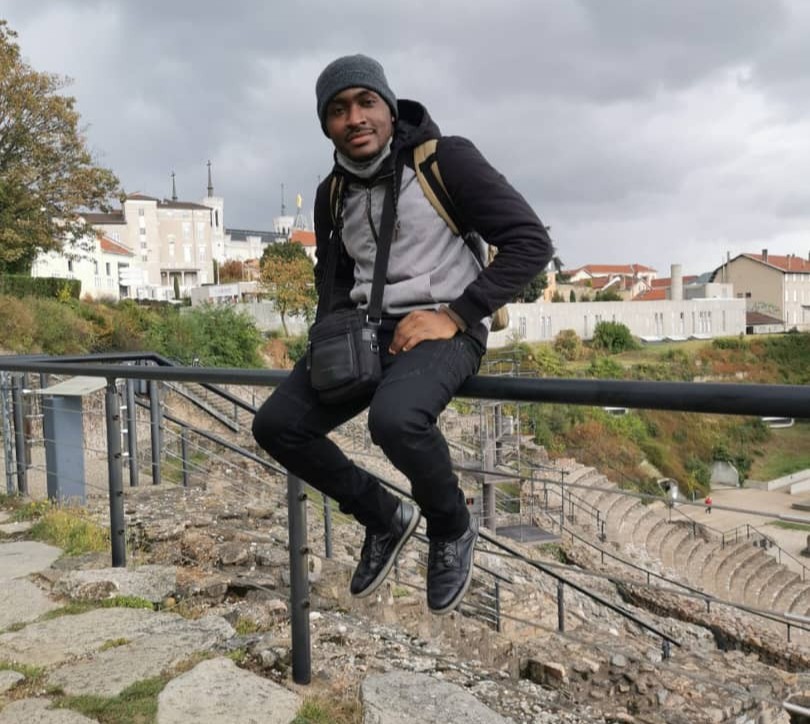
This post introduces Maxime Descartes Mbogning Fonkou, a postdoctoral fellow at the ScholCommLab. In this interview, Maxime reflects on his trajectory and commitment to advancing an open science that is also more equitable and accountable. He further shares a piece of advice that, while it initially sounded simple to him, has deeply impacted his approach to work and life.
Q#1 What are you working on at the lab, and what do you enjoy most about it?
I’m working under the supervision of Juan Pablo Alperin alongside an amazing interdisciplinary team to explore how scientific manuscripts evolve from preprints to final publications, and what these changes reveal about equity, recognition, and transparency in scholarly publishing. I’m especially interested in the trajectories of preprints that never get formally published: are they being excluded, or are they part of an alternative model of validation? Coming from Cameroon, having studied and worked in France, and now continuing my research in Canada, I’ve seen how access to knowledge and opportunities vary greatly across contexts. These experiences shaped my deep commitment to making science not just open, but also equitable and accountable. What excites me most about this project is the chance to contribute to a global conversation on reforming scholarly communication, and to do so with a team that shares both the passion and the purpose.
Coming from Cameroon, having studied and worked in France, and now continuing my research in Canada, I’ve seen how access to knowledge and opportunities vary greatly across contexts. These experiences shaped my deep commitment to making science not just open, but also equitable and accountable.
Q#2 Tell us about a recent paper, presentation, or project you’re proud of.
I’m especially proud of two recent projects that reflect my interest in research equity, open science, and the use of large datasets to understand scholarly communication.
The first is a paper I co-authored in Nature Biotechnology, where we analyzed 25 years of global patent data related to phage therapy, an alternative to antibiotics. I helped organize and analyze data to map who is filing these patents, where they’re from, and what types of institutions they represent. We found that most patents come from high-income countries, even though low- and middle-income regions could greatly benefit from such innovations. This highlighted important gaps in access, innovation, and equity.
The second project was a large-scale study on Open Access in African research, where we examined over 850,000 publications from 2002 to 2021. We looked at how access to scientific work has changed over time, what types of Open Access are used (Gold, Green, etc.), and how collaboration and funding affect visibility. I was especially proud to see how open publications tended to be more cited, and how international collaboration played a key role in driving access. This work speaks to the importance of transparency and inclusiveness in publishing practices.
Both projects employed bibliometric and metadata analysis, methods aligned with those used at ScholCommLab, and they raised important questions about equity, access, and visibility in research.

Q#3 What’s the best (or worst) piece of advice you’ve ever received?
“Train your mind to see the positive in everything.”
It sounded simple, but it changed how I approach research and life. Even when things go wrong, I try to find what I can learn from the experience. This mindset keeps me moving forward.
DOI: https://doi.org/10.59350/scholcommlab.5538